
Humanist ceremonies: how to celebrate life's important moments without a religious ceremony
A secular, personalized alternative for weddings, funerals, and milestone moments, centered on people, their stories, and the bonds that unite them.
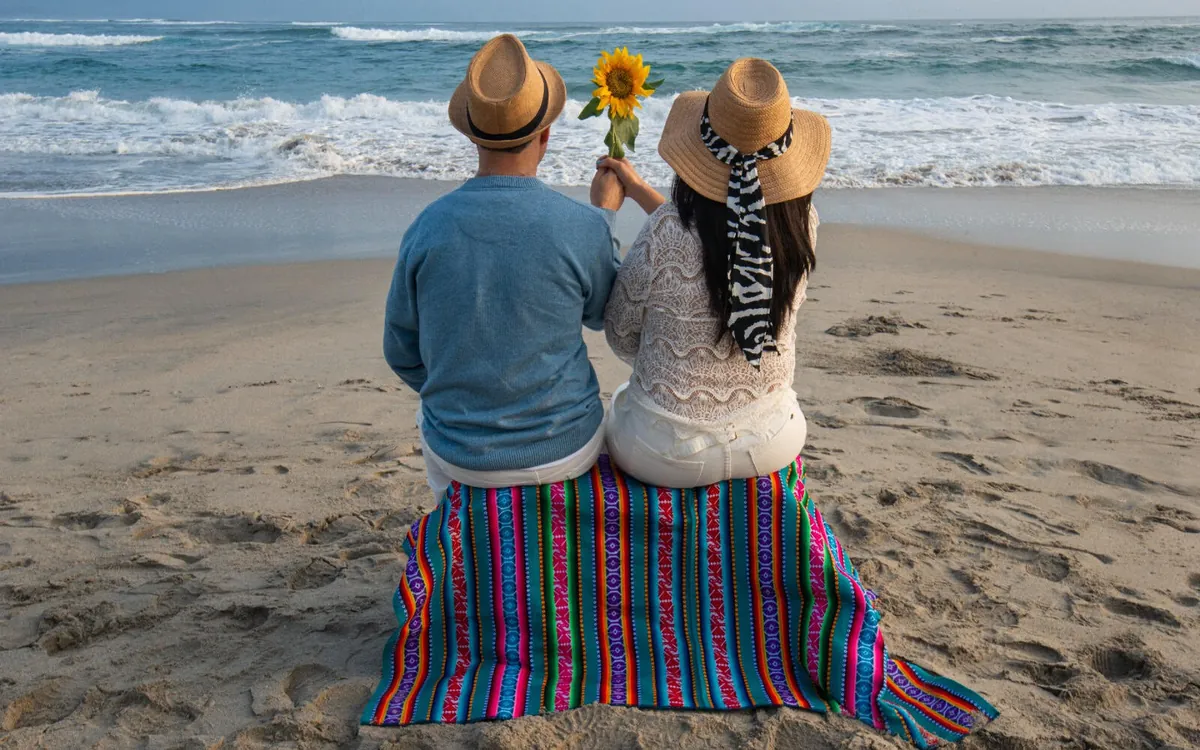
Photo: Flor Ruiz | Courtesy of Clarisa Incio
Life's important moments deserve to be celebrated. A wedding, the arrival of a child, or saying goodbye to a loved one are occasions when we seek to gather with the people who matter to us, express our feelings, and give special meaning to what we are experiencing.
For a long time, religious ceremonies have been the most well-known option for marking these events. But what happens with those who hold no religious beliefs, do not identify with any religion, or simply prefer celebrations that reflect their own convictions?
Humanist ceremonies offer an alternative. They allow us to celebrate and share these moments without resorting to supernatural beliefs or religious rituals, placing people, their stories, and the bonds that unite them at the center.
In Peru, this option is beginning to gain ground thanks to initiatives like Ceremonias Laicas (Secular Ceremonies), a project led by members of APERAT that seeks to bring humanist celebrations to more people.
What is a humanist ceremony?
A humanist ceremony is a secular, personalized celebration that acknowledges the significance of an event in the life of a person, a couple, or a family. It does not need to invoke a deity or follow a religious tradition. Its content is built from the experiences, values, and wishes of those who take part in it.
This does not mean it is a ceremony without emotion, solemnity, or symbolic meaning. On the contrary: it can include music, readings, words from family and friends, moments of reflection, and rituals specially chosen for the occasion.
The difference lies in the starting point. Rather than following an established religious script, the ceremony is built around the people and what that moment means to them.
That is why no two humanist ceremonies are alike. Each one responds to a particular story and seeks to ensure that those who participate can see themselves reflected in what is said and celebrated.
What types of humanist ceremonies exist?
Humanist ceremonies can accompany different moments in life. Among the most well-known are weddings and funerals.
Humanist weddings: celebrating a union based on the couple's story
A wedding is much more than the formalization of a marriage. It is also an opportunity to share with family and friends the story of a couple, express the commitment they are making, and celebrate the path they have chosen to embark upon.
In a humanist wedding, the couple plays a central role in designing the ceremony. They can choose the words, the music, the readings, and the rituals that best represent their relationship. The celebrant accompanies the process, talks with the couple, and prepares a script that captures their story and expectations.
The result can be an intimate ceremony or a larger celebration, formal or relaxed, traditional or completely original. There is no single formula.
In Peru, moreover, it is possible to integrate the legal formalization of civil marriage through the involvement of a notary. This way, the couple can celebrate their humanist wedding and complete the civil act at the same venue and during the same event, if they so wish.
This alternative allows combining the personal character of a humanist ceremony with the legal recognition of marriage, without having to organize two separate events.
Humanist funerals: saying farewell by remembering a person's life
The death of someone close confronts us with the need to say goodbye, support the family, and remember the person who has passed away. For many people, religious rites do not represent their convictions or express the way they wish to pay tribute to a loved one.
A humanist funeral offers another way to do so. The ceremony focuses on the life of the deceased: their experiences, their affections, their choices, their contributions, and the memories they leave with those who knew them.
The celebrant works with the family to learn the person's story and prepare a tribute that reflects who they were. It may include testimonials, music, readings, photographs, and moments of silence. There are no mandatory prayers or imposed religious references, although the ceremony can welcome family and friends who hold different beliefs.
The purpose is not to offer explanations about death or impose a way of coping with grief. It is to create a space for remembering, sharing affection, and saying farewell in a way that is consistent with the life and convictions of the person being honored.
Does a humanist ceremony have to be entirely secular?
A humanist ceremony does not stem from a religious doctrine and does not require its participants to share a particular belief. Its secular nature allows people with different convictions to take part without feeling excluded.
At a wedding, for example, a couple may have both religious and non-religious family members. At a funeral, attendees may interpret death in very different ways. The ceremony does not need to resolve those differences or ask anyone to give up their ideas. It is enough for the tribute to be respectful and centered on the person or the event that brings everyone together.
The freedom to personalize a ceremony also does not mean that everything has to be improvised. A good celebrant helps organize ideas, find the right words, and bring coherence to the flow of the event. Preparation is an important part of the outcome.
What is the difference between a humanist wedding and a civil wedding?
A civil wedding and a humanist wedding serve different functions, although they can be integrated.
Civil marriage is the legal act through which two people formalize their union in accordance with the law. A humanist ceremony, on the other hand, seeks to give personal and symbolic expression to that commitment. It focuses on the couple's story, their values, and the meaning they attribute to their union.
Traditionally, humanist weddings have been symbolic ceremonies with no legal effects on their own. However, in Peru, Law No. 31643 allows notaries to officiate civil marriages within their legal authority. Through agreements and coordination with notarial professionals, Ceremonias Laicas offers the possibility of incorporating this legal act into a humanist wedding.
This allows the celebration to have both personal content and legal effects, provided that the requirements established by Peruvian law are met. It is important to distinguish this format from a purely symbolic ceremony: the legal validity comes from the civil act performed by the notary, not from the humanist nature of the celebration.
Humanist ceremonies in Peru: a growing alternative
For years, people seeking a non-religious celebration in Peru had few known options. Although civil ceremonies allow the formalization of a marriage, they do not always provide the personalized space that a couple desires for sharing that moment with their loved ones. In the case of funerals, non-religious alternatives were also not very visible.
The initiative to bring humanist ceremonies to Peru began to take shape in 2020. After a process of preparation and celebrant training, the first registered humanist ceremony in the country took place in 2024: a funeral officiated by Daniel Tacsa, a member of the team.
That same process led to the creation of Ceremonias Laicas, a project driven by members of APERAT to offer personalized weddings and funerals without mandatory religious content. The team developed its services and experience with the support of individuals and organizations from the international humanist movement.
The project has also allowed more people to learn about humanism through a concrete experience. For many couples and families, discussing a non-religious ceremony is their first encounter with this way of understanding life: a perspective that recognizes the value of human relationships, freedom of conscience, and the possibility of finding meaning without resorting to supernatural explanations.
Celebrating in accordance with our convictions
Not everyone finds meaning in the same symbols, traditions, or beliefs. Nor should anyone have to resort to a ceremony that does not represent them in order to celebrate a union or say goodbye to a loved one.
Humanist ceremonies are based on a simple idea: we can give meaning to the important moments of our lives from our own convictions. We can celebrate love, acknowledge a commitment, remember a life, and support one another through grief without the need to follow a religious rite.
This does not mean rejecting those who choose religious ceremonies. It is about expanding the possibilities so that each person can decide how they want to experience and share those moments.
Humanism is also expressed in these everyday decisions: in the freedom to build our own traditions, in the respect for the convictions of others, and in the importance we place on the people who are part of our lives.
Would you like to learn about an alternative for celebrating a wedding or saying farewell to a loved one without a religious ceremony?
You can learn about the work of Ceremonias Laicas, an initiative that offers personalized humanist ceremonies in Peru.